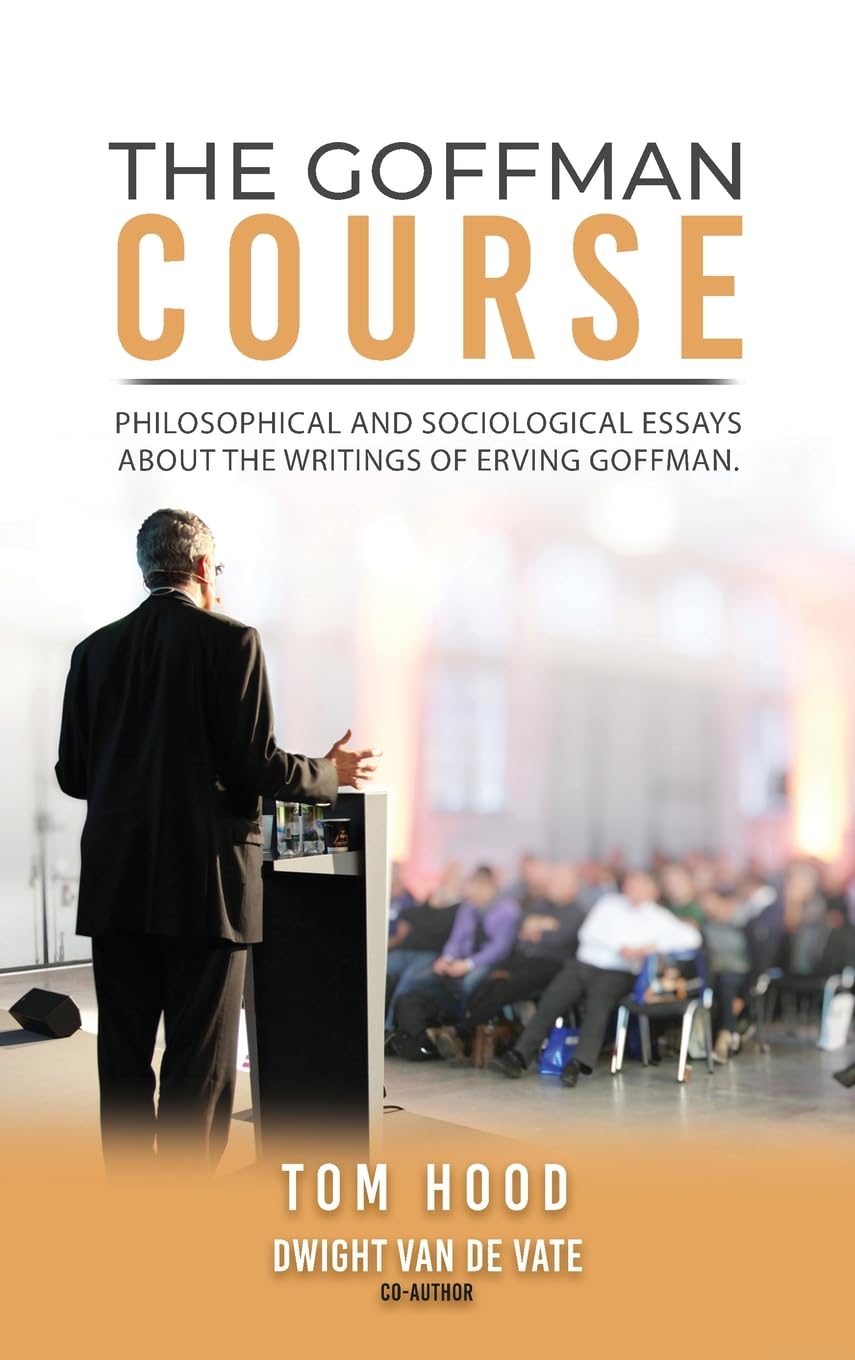
The Goffman Course
The essays in this book call attention to the ideas developed in the writings of Erving Goffman. The authors relate Goffman's ideas to the writings of philosophers and sociologists.
The US Review of Books
Book Review by Mari Carlson
“Goffman writes… that it is not ‘men and their moments, but rather moments and their men.”
This book is the written result of an interdisciplinary lecture class presented by philosophy and sociology professors at the University of Tennessee in Knoxville around their shared interest in the sociologist Erving Goffman.
About The Authors
The co-authors Dwight Van de Vate, Jr. (philosophy) and Tom Hood (sociology)taught together at the University of Tennessee, Knoxville corresponded with Goffman and presented these essays as lectures to students.
Thomas Hood
Dwight Van De Vate
The Goffman Course
The essays in this book call attention to the ideas developed in the writings of Erving Goffman. The authors relate Goffman's ideas to the writings of philosophers and sociologists. This book consists of essays presented as lectures to undergraduate and graduate students at the University of Tennessee, Knoxville. The context was a special class during which students were reading the published work of Erving Goffman and writing about what they were reading. Some Students enrolled as philosophy students and others as sociology students.
What's Inside?
Part 1 the genre or genus
GOFFMAN COMES TO us identified as a sociologist, sociology in turn identified as "the science of society."
Part 2 society
WE SAID THAT Goffman is trying to frame general laws about the behavior of human beings in our society,.
part 3 human being
THE SECOND OF our three basic terms was "human being." I shall be referring to Asylums and my own article,.
What People Say
Heavy going at times in terms of academic language, The Goffman Lectures is essential reading for professional social scientists. But Van de Vate's pieces, in particular, clear enough cultural and linguistic barriers to engage curious general readers. Both writers relate Goffman's work to everyone from Shakespeare to Sartre to Eliza Doolittle to Dustin Hoffman's savant character in Rain Man. In simplest terms, Goffman believed that “the self” is socially constructed, an adaptable, chameleonic actor that is “real” only insofar as it embodies the social order. He expanded this basic view in seminal works like The Presentation of Self in Everyday Life (1956), Stigma (1963) and, most important for these authors, Frame Analysis (1974), to which they devote half of these pages.
Jim
The Goffman Course
Philosophical and Sociological Essays About the Writings of Erving Goffman
Frequently asked questions
Some students enrolled as philosophy students and others as sociology students. Professor Hood and Professor Van De Vate often handed out printed versions to the students on the day they were presented.
You can visit and check out my amazon page to find more about the book and how to get your copy.
This awesome website was created with the help of Author’s Tranquility Press and their amazing Marketing Services Team. Or you may follow them at any social media platform.